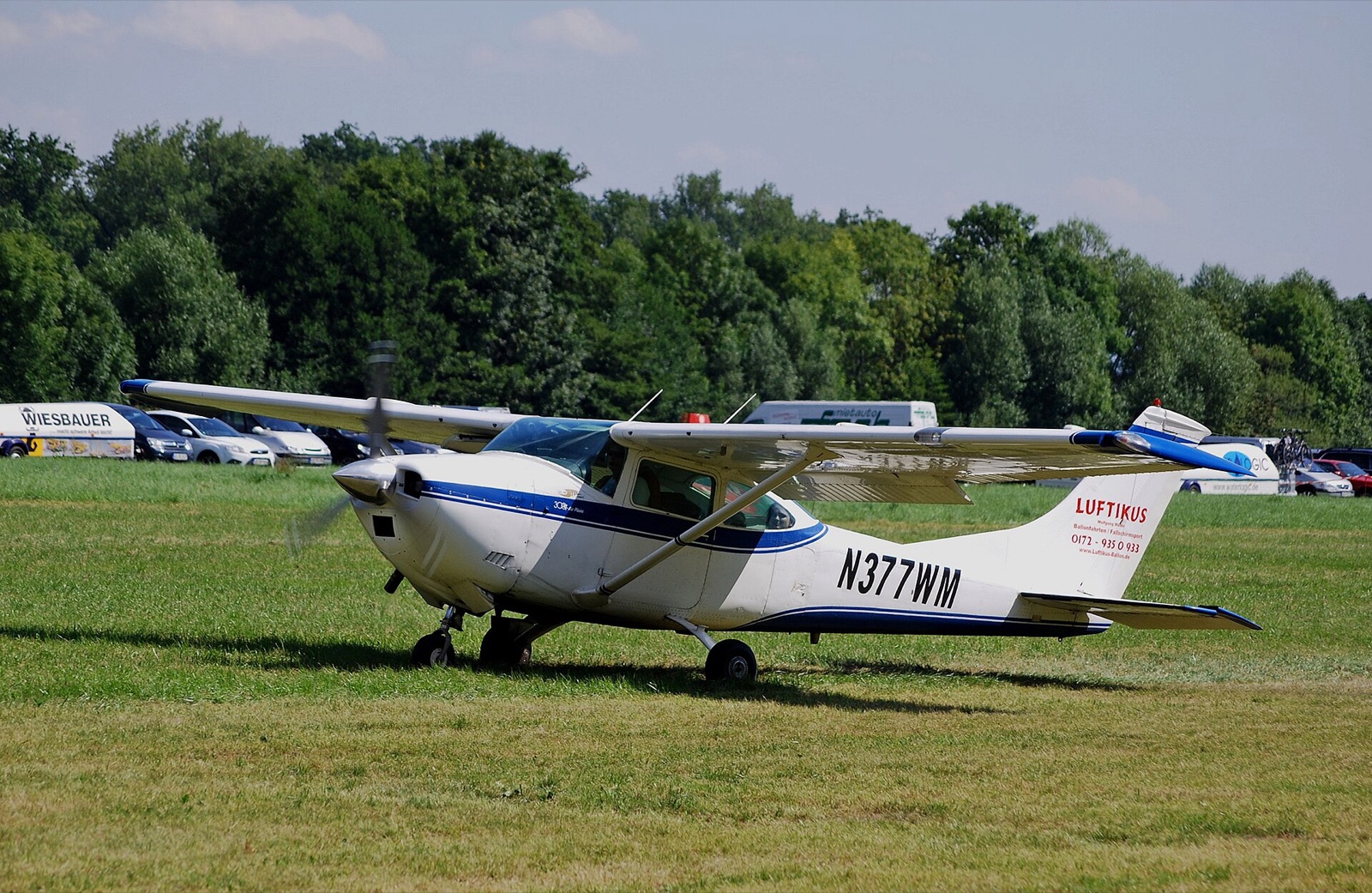
"Private aircraft" conjures a jet. What actually flies most of the routes on this site is a Cessna: a high-wing, single-engine aircraft with three or five passenger seats, a cruising speed around 200 to 250 kilometres an hour, and the ability to land on the short strips at Cuyo, Bantayan and Siquijor that nothing larger can use. That is the whole reason it can go where the airlines cannot. It also sets three limits that decide whether a given trip works: how many people, how much weight, and how long a leg is comfortable.
The fleet, honestly
Cessna 172 Skyhawk
- Seats
- 3 passengers
- Luggage
- About 80–90 kg for the cabin
- Where you will meet it
- The Cebu network: every Mactan leg from Bantayan to Zamboanga.
The most-produced aircraft ever built. High wing, so every seat has a view straight down. Comfortable to about two hours.
Cessna 182 Skylane
- Seats
- 3 passengers
- Luggage
- 90 kg for the cabin
- Where you will meet it
- Palawan: Puerto Princesa, San Vicente, El Nido, Coron and Cuyo.
A 172 with a bigger engine: faster, better in the hot afternoons Palawan is known for, and the same three seats.
Cessna 206 Stationair
- Seats
- 5 passengers
- Luggage
- About 80 kg for the cabin
- Where you will meet it
- The long cross-sea legs from Palawan to Bohol, and Cebu to Panglao.
The workhorse of bush flying. Two more seats, a double cargo door, and the type to ask for with a longboard or a family of five.
Grand Caravan and other turboprops
- Seats
- Up to 9 passengers
- Luggage
- Quoted per trip
- Where you will meet it
- Quoted rather than listed: full groups, long crossings and cargo.
Appear on the empty-legs board and in quotes. The right answer for a dive group of eight or a wedding party.
Seaplane
- Seats
- Up to 6 passengers
- Luggage
- Quoted per trip
- Where you will meet it
- Palawan only, landing on water at resorts and coves without an airstrip.
A different product with its own trade-offs; see the seaplane-or-plane guide.
Seat and luggage figures are the ones operators publish on their price cards and vary slightly by individual aircraft; the card for your leg is the one that counts.
The price is the cabin, not the seat
Every figure on this site is for the whole aircraft. That is why the same route can carry two prices: Cebu to Panglao is listed by one operator on a three-seat Cessna 172 and by another on a five-seat Stationair, and the cheaper card is simply the smaller cabin. Two people should book the 172. A family of five cannot, whatever the price says.
CEB TAG
Cessna 172 · up to 3 passengers · 54 kg luggage
Whole aircraft
₱48,000
$800
CEB TAG
Cessna U206G Stationair · up to 5 passengers · 81 kg luggage
Whole aircraft
₱88,800
$1,400
The arithmetic follows from that. Three people in a 182 pay a third each; the same three in a Stationair pay a third of a larger number for two empty seats. The cost guide works the per-person comparison against vans and airlines route by route; the short version is that a light aircraft is priced for a full cabin, and a full cabin is where it beats everything else.
Weight, and what actually fits
The luggage figure is a weight limit for the cabin, not a bag count, and it exists because a light aircraft is balanced as carefully as it is loaded. The pilot works out passengers plus bags plus fuel for the leg before every departure, and on a hot afternoon at a short strip the margin is real. Ninety kilograms across three people is a generous holiday allowance if the bags are soft. It is a tight one if they are hard-shell suitcases, because the baggage compartment behind the rear seats is shaped for duffels, not for cases with wheels. Pack soft, and tell the operator the total weight when you book; the answer is almost always yes, and when it isn't they will say so before you pay.
- Dive gear is the best case for flying privately: regulators, computers and camera housings ride in the cabin with you rather than in an airline hold, and the weight is modest once the tanks stay with the shop. Say "dive group" when you book and the operator plans the load around it.
- Kite gear packs into soft bags and travels easily in a 182, which is why the Cuyo legs work for a kitesurfing week. Boards under about 140 centimetres go in with a seat down.
- Surfboards are the one awkward item. A shortboard fits some light aircraft with the rear seat folded; a longboard needs the Stationair's double cargo door or a turboprop. Ask before you book, not after.
- Children and infants each count as a passenger regardless of age or size, because the limit is about seats and restraints, not weight alone. A couple with a baby is three passengers.
Comfort, and how long is too long
A Cessna cabin is a car's front seat with a better view. There is no aisle, no toilet and no cabin crew; there is a headset, a window at every seat and a pilot who will point out the reef as you cross it. Up to about an hour and a half it is a pleasure, and the 20- to 50-minute Palawan and Cebu legs are the aircraft at its best. The two-hour crossings from Palawan to Bohol are at the comfortable limit for three adults in a 182; on those the Stationair's extra room, or a turboprop for a larger group, earns its premium. The operator's quote names the type and the block time, and the seaplane-or-plane guide covers the one other choice Palawan offers.
Light aircraft fly in visual conditions and in daylight. That is the trade for the short strips: when the weather closes in, the operator proposes a new time rather than pressing on, you accept or decline it from your booking link, and a flight that cannot operate is not charged. On a Philippine island in the dry season it is a rare interruption. In the monsoon months it is worth a morning departure and a loose afternoon.
A rule of thumb
One to three people with soft bags: the Cessna on the price card, and the cheapest one where two are listed. Four or five, or anyone with a longboard: the Stationair, and if your route only shows a three-seater, search it anyway and operators will quote the larger type. Six or more, or a two-hour crossing with a full group: a turboprop, quoted, and worth a look at the empty-legs board first, where the Caravans tend to appear. Every route with a fixed price is on the flights page, with the aircraft named on each card.